

Hear from Our Customers
You’ve noticed the musty smell. Maybe someone in your house has been dealing with headaches, congestion, or breathing issues that won’t quit. Or you spotted discoloration on your walls after that leak last month and you’re wondering what’s happening behind the drywall.
Here’s what most people don’t realize: visible mold is just part of the problem. Mold spores float through your air. They settle in your ducts, behind wallpaper, under carpets. A black mold test or surface swab only tells you what’s on that one spot—it doesn’t show you what’s in the air your family breathes every day.
That’s where professional mold testing comes in. We use air sampling, moisture meters, and infrared cameras to find mold you can’t see and measure what’s actually in your indoor environment. You get a full picture of what’s happening in your home, not just a guess based on a visible patch. Then you know exactly what needs to be addressed and what doesn’t.
We’ve been testing air quality and inspecting homes in Bucks County for more than two decades. We’re not a franchise. We’re local, and we know how Bridge Point homes are built, how the humid summers here create conditions for mold growth, and what homeowners in Montgomery County deal with after water damage or flooding.
We’ve seen the basements that flood every spring. The older homes with poor ventilation. The new construction that looks fine but has moisture trapped in the walls. When you call us, you’re talking to people who’ve been inside hundreds of homes just like yours.
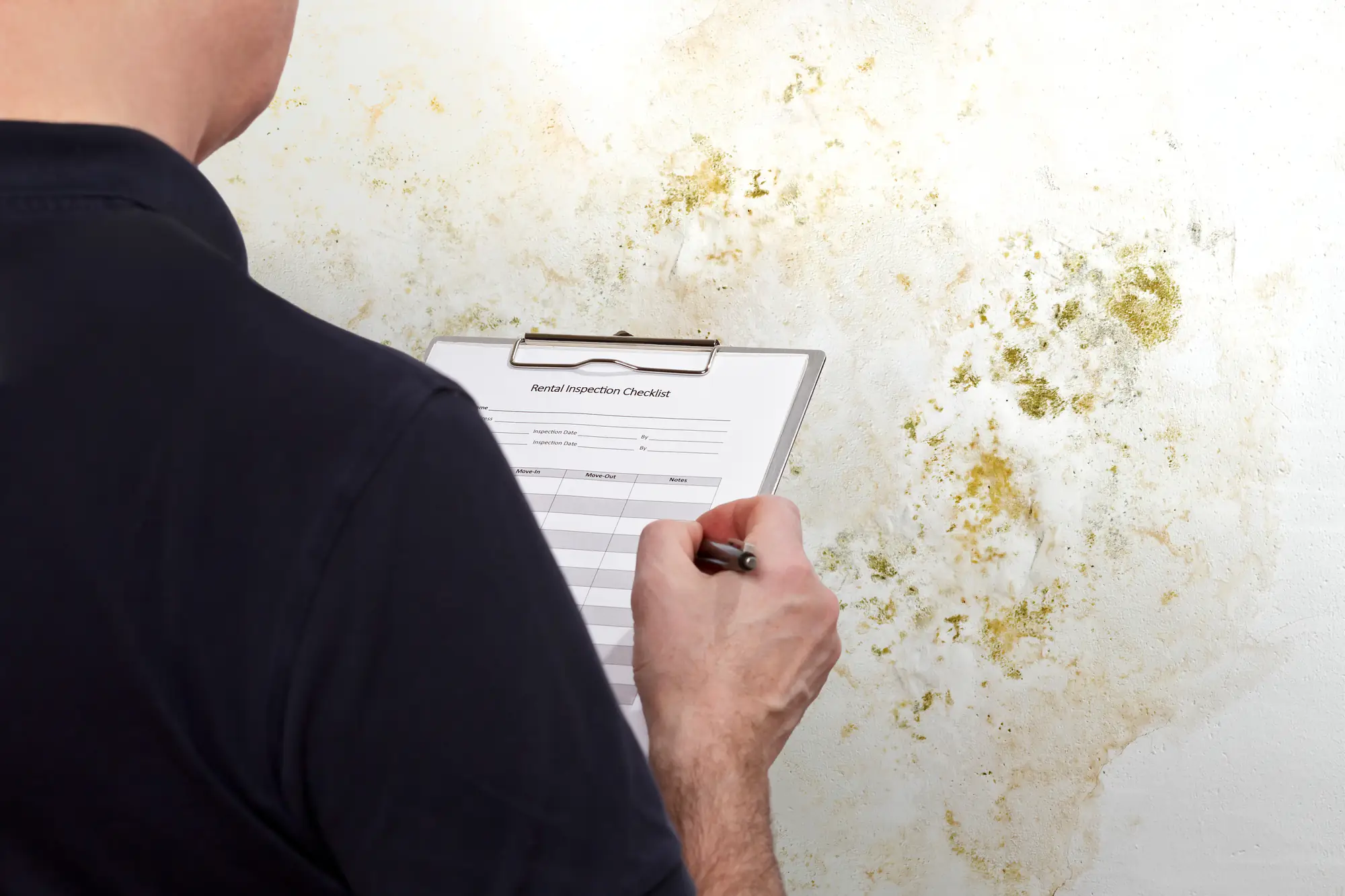
First, we walk through your property with you. You show us where you’ve noticed problems—the smell, the stains, the areas that stay damp. We ask about your health symptoms, your HVAC system, any recent water issues. This gives us context before we start testing.
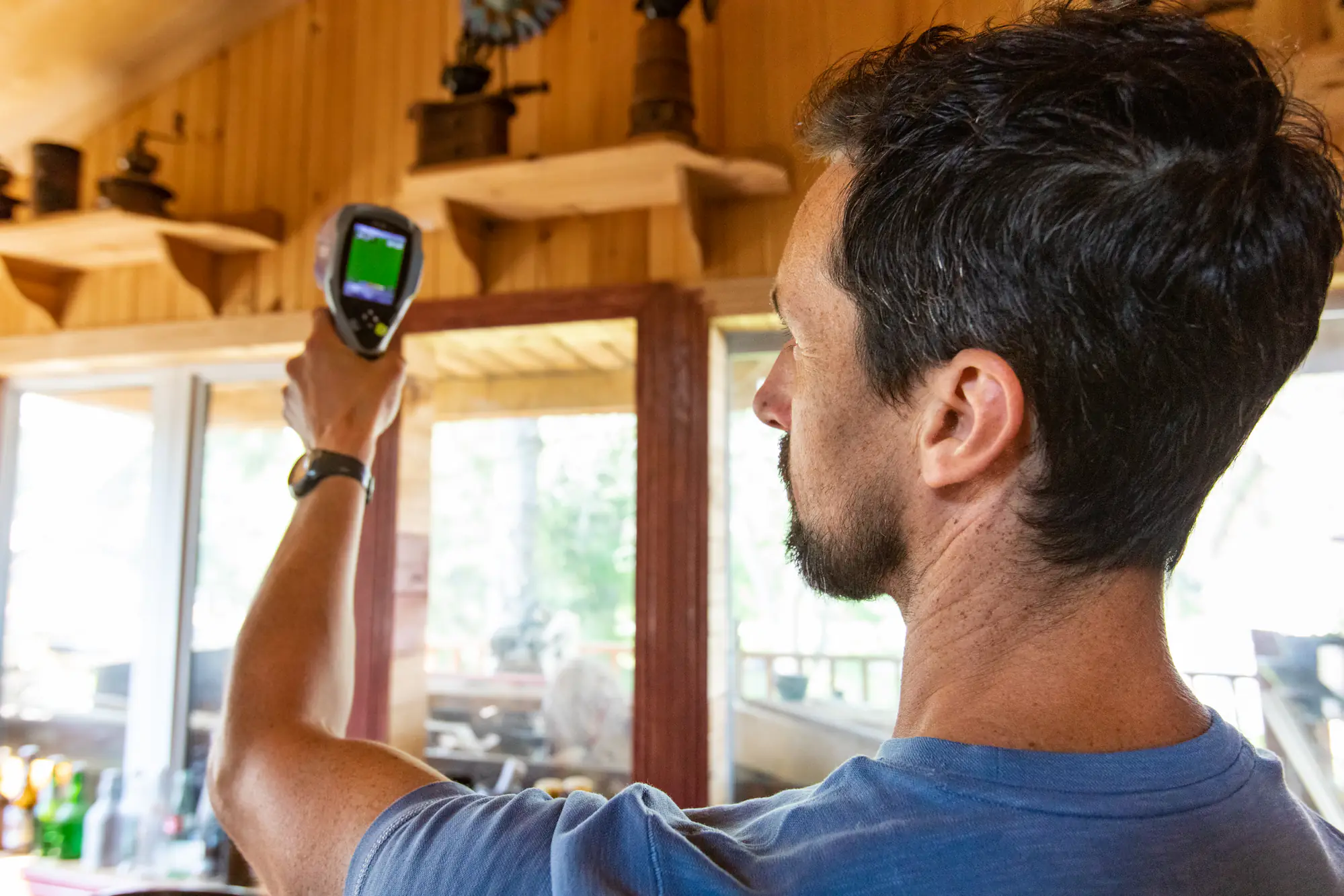
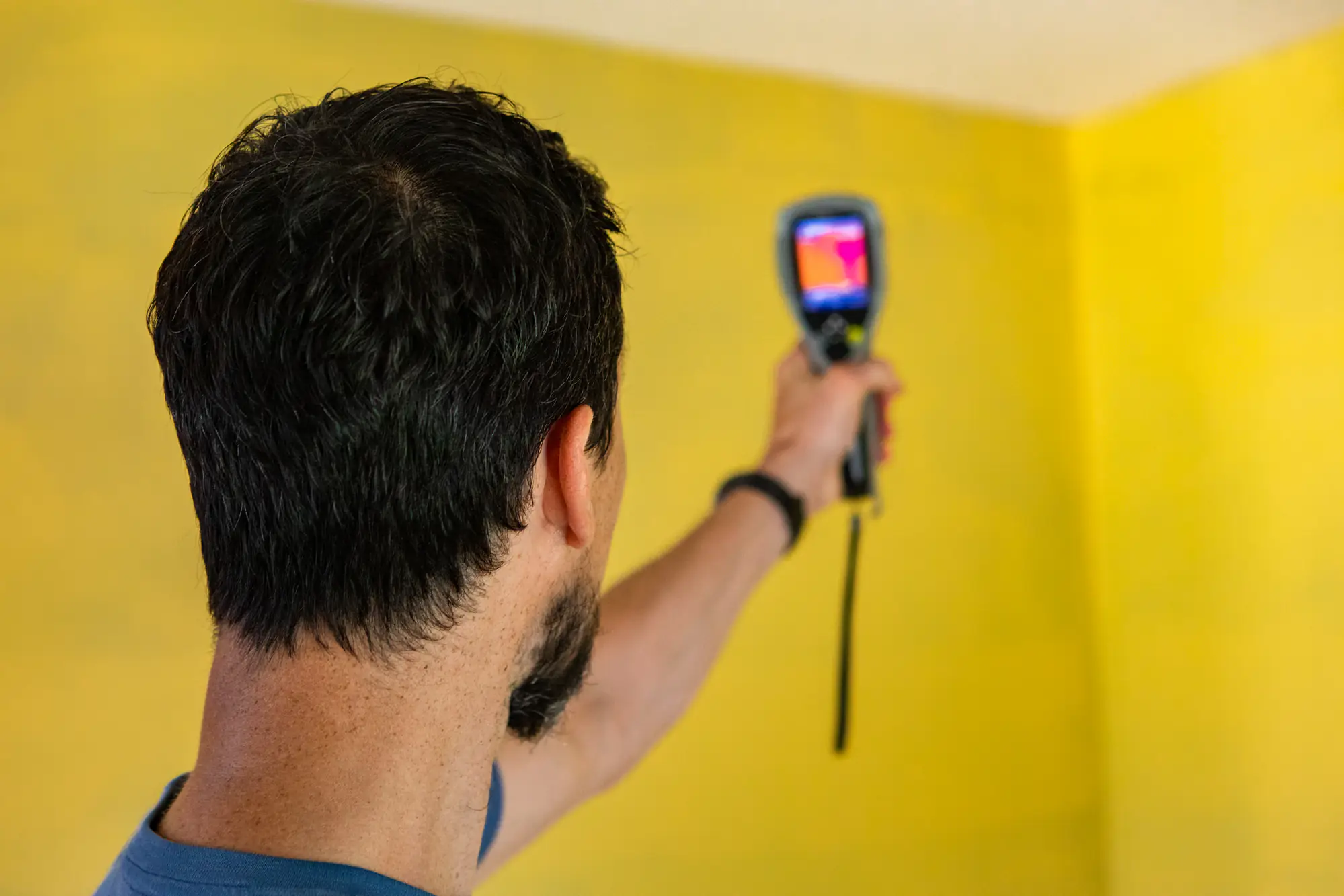
Then we use moisture meters to check walls, floors, and ceilings for hidden water. High moisture means high mold risk. We bring in infrared cameras to spot temperature differences that indicate water intrusion you can’t see. If we find problem areas, we take air samples from those rooms and send them to a lab for analysis.
Surface testing comes next if there’s visible growth. We swab or tape-lift samples to identify the specific type of mold. Some molds are more toxic than others, and knowing what you’re dealing with matters when it’s time for remediation. The lab results come back in a few days, and we walk you through what they mean in plain language—no jargon, no upselling. Just the facts about what’s in your home and what your options are.
Ready to get started?
Our residential mold testing includes air quality sampling from multiple rooms, moisture mapping of affected areas, infrared thermal imaging, and surface testing when visible mold is present. You get a written report that breaks down the lab results, shows you where the moisture problems are, and explains what needs to happen next.
Bridge Point sits in a humid climate zone. Your home is at higher risk for mold growth than homes in drier parts of the country. That’s not scare tactics—it’s geography. The EPA estimates that nearly half of U.S. homes have visible mold or mold odor, and in areas like ours with hot, humid summers, that percentage climbs. Add in older housing stock, and you’ve got the perfect conditions for mold to thrive in basements, crawl spaces, and bathrooms.
We also check your HVAC system. Ducts are a common place for mold to spread because they’re dark, they collect dust, and if there’s any moisture, spores grow fast. Cleaning ducts without testing first just moves the problem around. Testing first tells you if duct cleaning is even necessary or if the issue is somewhere else entirely.
Most residential mold testing in Bridge Point runs between $300 and $600 depending on the size of your home and how many samples we need to take. A basic air quality test with two or three samples is on the lower end. If you’ve got a larger home, multiple problem areas, or you need surface testing in addition to air sampling, it’ll be closer to the higher end.
We offer free inspections to assess your property first. That means we come out, look at what’s going on, and give you an honest assessment before you spend a dime on lab work. Some situations don’t even need testing—if there’s active water damage and visible mold, you already know you need remediation. Testing is for when you need confirmation, when you’re buying or selling a home, or when you’ve got health symptoms but no obvious source.
Lab results typically come back within 24 to 48 hours after we collect the samples. We send air and surface samples to a certified lab that analyzes spore counts and identifies specific mold types. Once we get the results, we call you to schedule a time to go over the report together.
The report shows spore counts for each room we tested, compares indoor levels to outdoor baseline levels, and identifies any toxic molds like Stachybotrys (black mold) or Aspergillus. High indoor counts compared to outdoor air means you’ve got an active mold problem inside. We explain what the numbers mean for your specific situation and what the next steps should be—whether that’s fixing a moisture issue, cleaning ducts, or full mold remediation.
You can buy DIY mold test kits at hardware stores for $10 to $50, but they’re not very useful. Most of them just tell you that mold is present—which isn’t helpful because mold spores exist in every home. What matters is the type of mold and the concentration. A petri dish sitting in your basement will grow mold no matter what. That doesn’t tell you if you have a problem or how serious it is.
Professional testing uses calibrated air pumps that pull a specific volume of air through a collection device. The lab counts spores per cubic meter and identifies species. That gives you actual data you can use to make decisions. We also use moisture meters and thermal cameras that cost thousands of dollars—tools you’re not going to have lying around. If you’re dealing with health symptoms, preparing for remediation, or need documentation for insurance or real estate purposes, professional testing is the only way to get reliable information.
Air testing measures mold spores floating in your indoor air. We use an air pump to collect samples from different rooms, and the lab counts how many spores are in each cubic meter of air. This tells you what you’re actually breathing and whether your indoor air quality is worse than outdoor air. Air testing is the best way to find hidden mold because spores circulate through your whole house even if the growth is behind a wall.
Surface testing takes samples directly from visible mold growth using swabs or tape lifts. The lab identifies the specific species growing on that surface. Surface testing is useful when you can see mold and you need to know if it’s a toxic variety like black mold, or something less concerning. It doesn’t tell you what’s in your air, though. Most thorough mold inspections include both types of testing—air samples to assess overall air quality and surface samples to identify visible growth.
If you’ve got visible mold and active water damage, you probably don’t need testing—you need remediation. Testing won’t change the fact that the mold needs to be removed and the moisture source needs to be fixed. In that case, testing is just an extra expense that delays getting the problem handled.
But there are situations where testing makes sense even with visible mold. If you’re buying a home and the seller claims the mold was remediated, testing confirms whether spore levels are actually back to normal. If you’ve had mold removed and you want to verify the air is clean, post-remediation testing gives you that confirmation. And if you’ve got a small patch of visible mold but family members are having serious health symptoms, testing can reveal whether there’s a much bigger problem hidden somewhere else in the house. It’s about getting the full picture so you’re not guessing.
Lab results are highly accurate when samples are collected correctly and analyzed by a certified lab. The report shows spore counts for each mold type found in your samples, measured in spores per cubic meter of air. The lab also tests an outdoor sample as a baseline, because mold spores are always present in outdoor air. If your indoor counts are significantly higher than outdoor counts, you’ve got indoor growth.
There’s no official “safe” level for mold, but generally, indoor counts should be similar to or lower than outdoor levels. If you’re seeing indoor counts two or three times higher than outdoor air, that’s a red flag. Certain molds are more concerning than others—Stachybotrys (black mold), Chaetomium, and some Aspergillus species produce mycotoxins that can cause serious health issues. The report identifies these specifically. We walk you through the results and explain what’s normal, what’s elevated, and what needs immediate attention based on the types and concentrations found in your home.
Other Services we provide in Bridge Point